
Celebrating 30 Years of The Edwards Aquifer Authority
Posted on June 23, 2026 by Carolyn Campos

EAA Board Meeting in Hondo held on January 1, 2001
June 28, 2026, marks a major milestone for the Edwards Aquifer Authority (EAA): 30 years of managing, enhancing, and protecting one of Texas’ most vital natural resources.
Since officially beginning operations in June 1996, the EAA has worked to balance the needs of communities, ecosystems, agriculture, and industry while ensuring the long-term sustainability of the aquifer system. Today, the EAA manages the Edwards Aquifer for all of Uvalde, Medina, Bexar counties and portions of Atascosa, Caldwell, Comal, Guadalupe, and Hays counties, serving millions of Texans who rely on the Edwards Aquifer as a source of water.
Why we’re here
30 Years of Progress
Kristy Kollaus, EAA Environmental Scientists II, Threatened & Endangered Species Department
Non-native animal species control
Bank Stabilization Signage in San Marcos, Texas
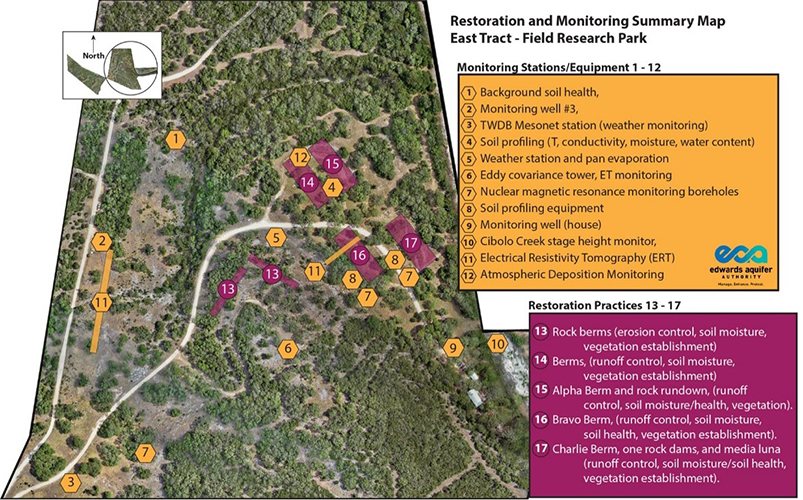
The EAA has also become a leader in aquifer research and monitoring by utilizing advanced technology to track aquifer levels, spring flows, and water quality in real time. Its scientific efforts help inform regional water management decisions and provide valuable data. The EAA also expanded its research capabilities through the development of the Field Research Park, a 150+ acre living laboratory located within the Edwards Aquifer Recharge Zone. The site supports studies on recharge processes, karst geology, native ecosystems, and aquifer sustainability.
Education has remained at the heart of the EAA’s mission. Since opening in 2022, the Education Outreach Center (EOC) has welcomed over twenty thousand visitors from across Texas and beyond through interactive exhibits, educational programming, and community events.

Looking Toward the Future
As the EAA celebrates its 30th anniversary, the organization continues to look ahead. Population growth, climate variability, and increasing water demands present challenges, but the EAA remains committed. The past 30 years have demonstrated the importance of science-driven conservation and strong public partnerships. Through the EAA, future generations will continue to benefit from the Edwards Aquifer for decades to come.
Browse the EAA’s 30th Anniversary.
More Posts
June marks the official start of summer – and one of the most fascinating astronomical events of the year: the summer solstice. This annual milestone happens when Earth’s tilt is at its maximum toward the sun, giving the Northern Hemisphere its longest day and shortest night of the year. This year, the summer solstice arrives on June 20th at 3:50 p.m. CDT.

Posted on August 31, 2026 by Trinity EspinozaThis Wednesday, September 2nd, 2026, is Protect Your Groundwater Day! As promoted by WellOwner.org and the National Groundwater Association (NGWA), this annual celebration acknowledges the importance of protecting this...
0 Comments